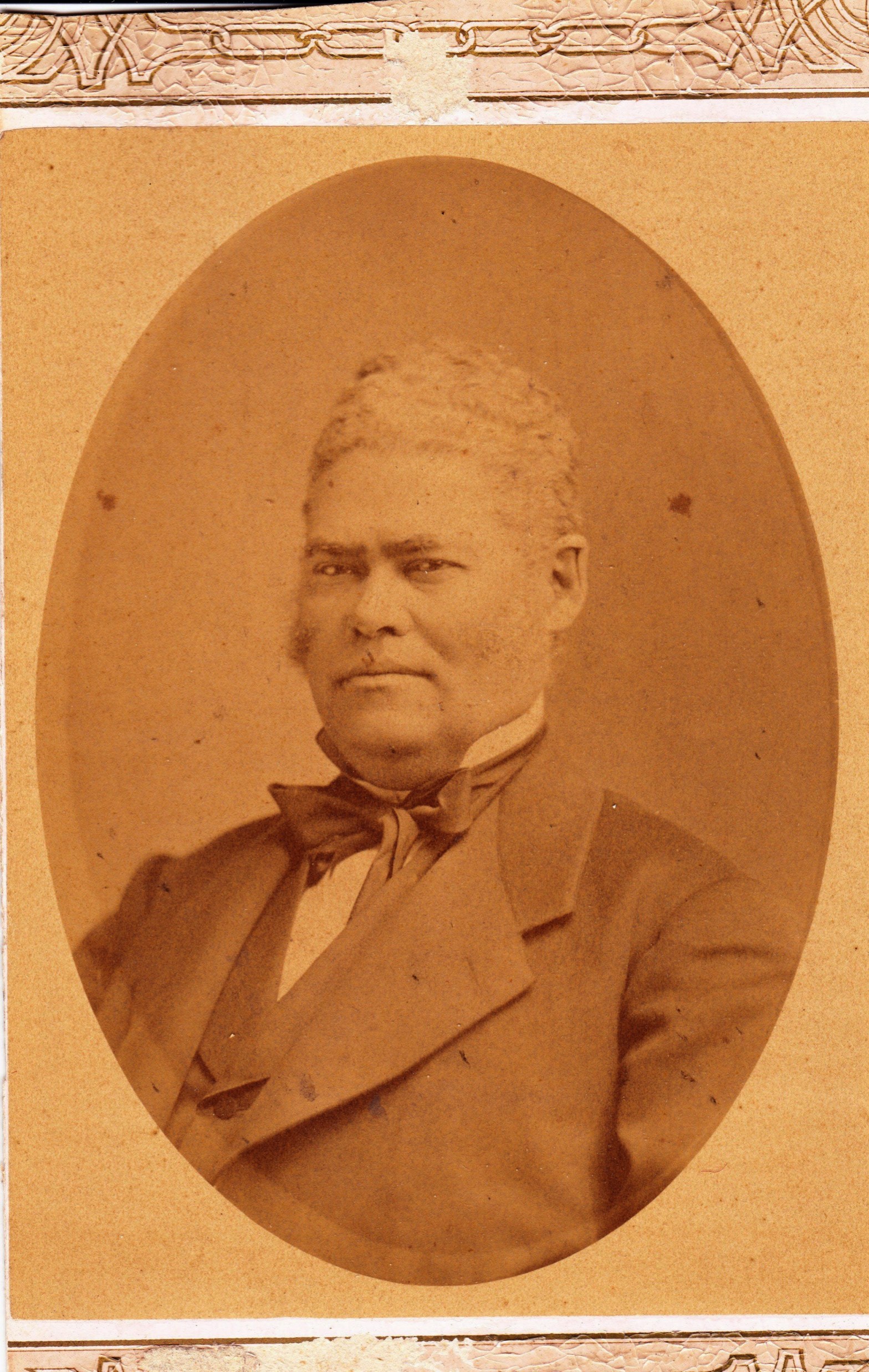
My 3rd great grandfather John Jones was one of the first African Americans to establish a business in downtown Chicago. His thriving cleaning and tailoring shop, along with a real estate business made him one of the wealthiest African Americans in the country. He was also active in abolition and politics. He established his home as a terminal on the Underground Railroad; was vice president of the Colored National Convention of free black men; was president of the first Black Illinois State Convention held in Chicago; became the state’s first black notary public; and as Cook County commissioner, was the first black elected to public office in Chicago.
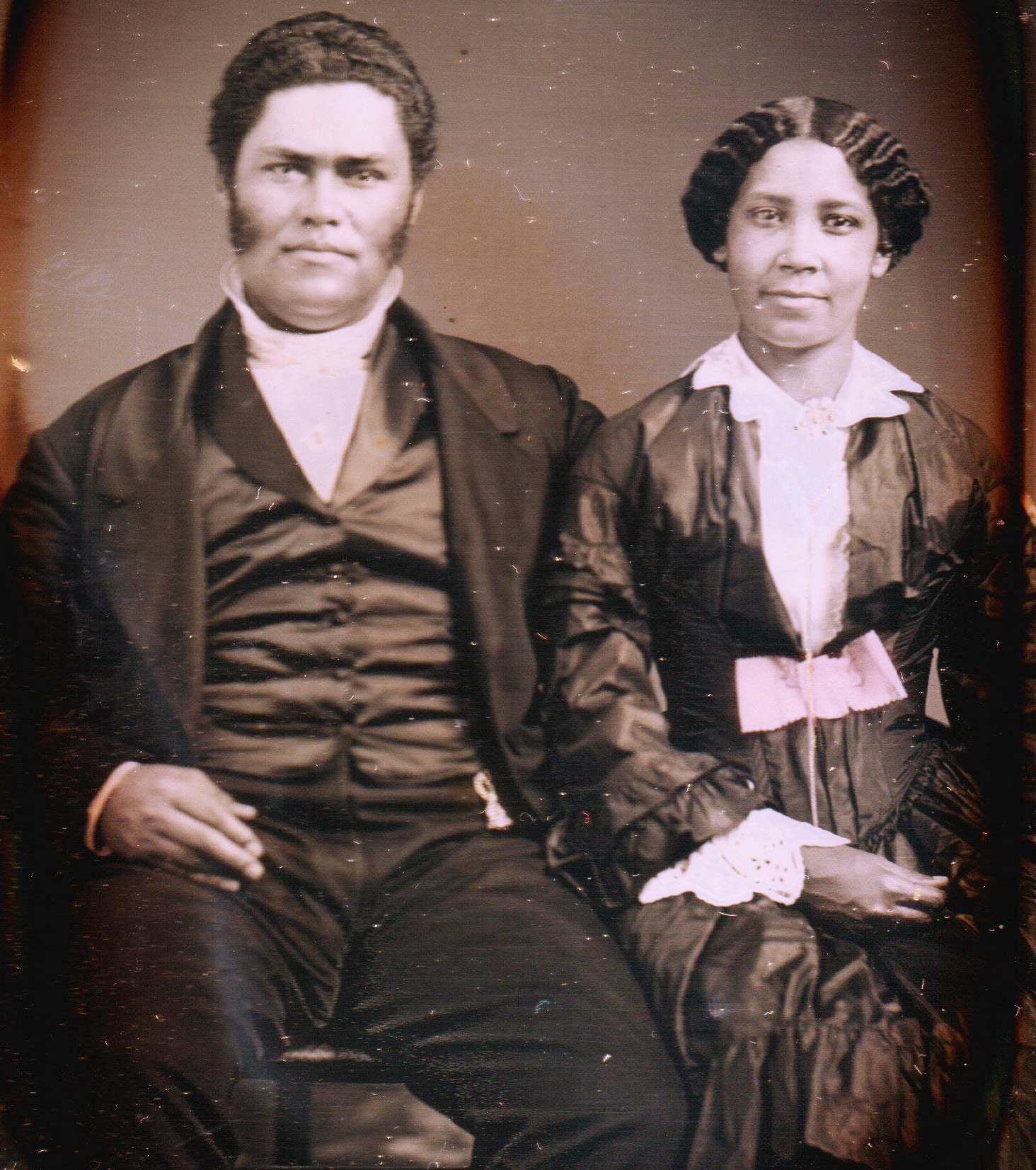
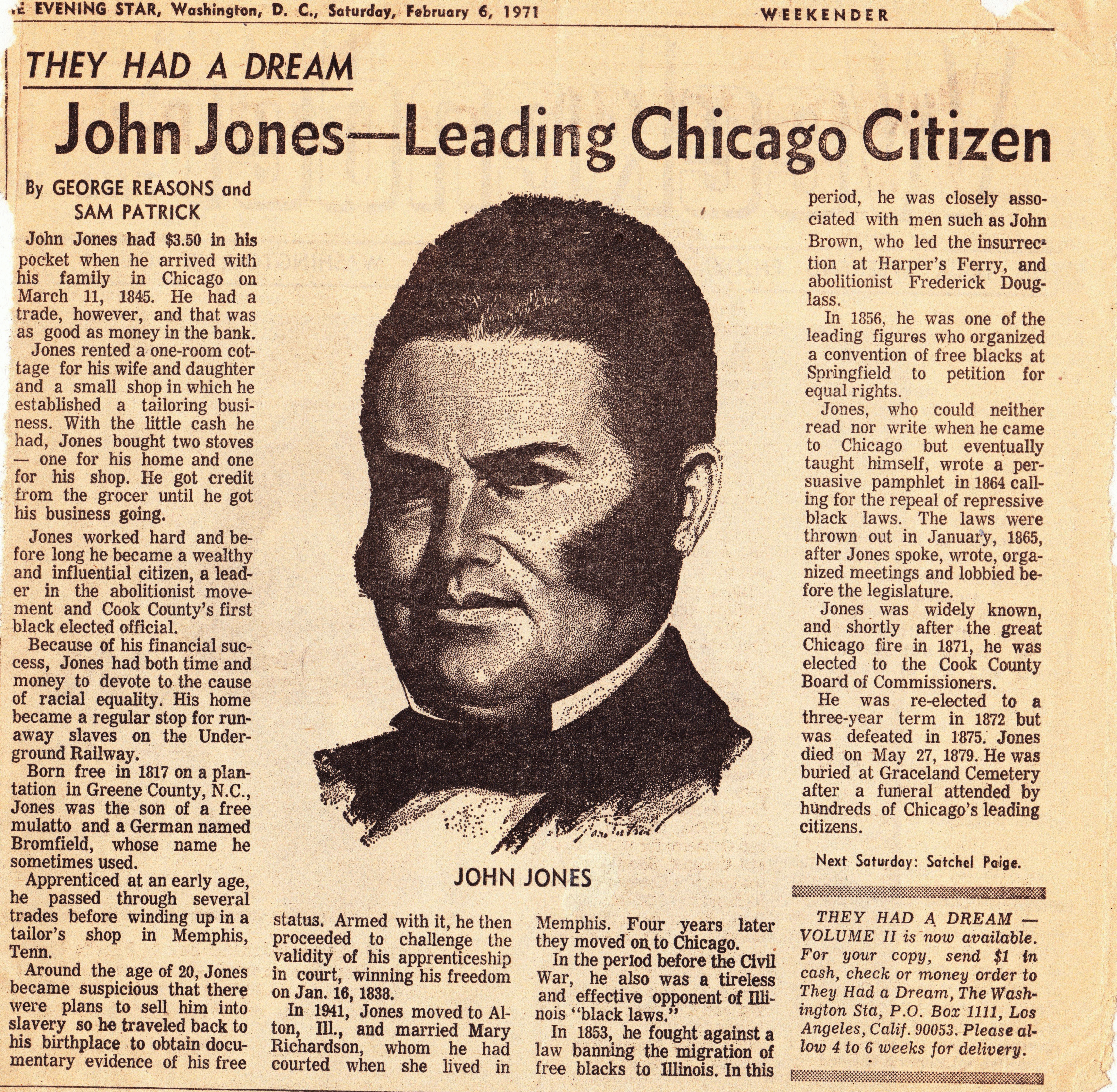
Born on a plantation in Greene County, North Carolina, on November 3, 1816, John Jones was the son of a German man named John Bromfield and an enslaved Black woman named Jones. There are some records that state she was free; however, it is my belief that her freedom was connected to her relationship with John Bromfield and the birth of John Jones. (If she were a free woman before the relationship with John Bromfield, there would be record of her first name and it wouldn’t make sense for her to indenture her son because of the fear of him being sold into slavery). MaMa Jones protected her son’s status by apprenticing him to a man named Shepard, who saw that he received training as a tailor. Later Shepard relocated to Tennessee, where he bound him over to Richard Clere, a tailor who lived in the Memphis area. He trained well and became an experienced tailor; however, when Clere’s business became slow he often hired him out to work with other tailors in the area. When Shepard died, his siblings attempted to force John Jones into slavery claiming that he was never free. He had to escape and make the journey to North Carolina to get his freedom papers and then stand trial to prove his status as a free man of color. Upon winning the trial, he moved to Alton, Illinois to reconnect and marry the love of his life, Mary Richardson Jones. After spending all that he had saved to secure their freedom papers, John and Marry made their way to Chicago with about 3 dollars in their pockets.
John Jones made his tailoring business work and became one of Chicago’s first black entrepreneurs. His home at 119 Dearborn was the site of his business known as J. Jones, Clothes Dresser and Repairer. Some sources claim that at first they lived in a one-room cottage at Wells and Madison Streets and opened their business a few blocks away. A skilled tailor, he soon had a thriving enterprise and catered to many of Chicago’s elite. By 1860 his business was called Clothes Cleaning and Repairing Room and, by his claims, was the city’s oldest and best business enterprise. His wealth had increased from the mere $3.50 that he had when he reached Chicago to between $85,000 and $100,000. Although he lost money during the Great Chicago Fire of 1871, he continued to be recognized as one of the country’s wealthiest African Americans. As well, from the 1850s until he died, John Jones was the undisputed leader of black Chicago.
Without formal education, John Jones knew that he needed fundamental reading and writing skills to manage his business venture and to enable him to operate in the abolitionist’s activities that he found appealing. Under Chicago abolitionist and noted lawyer Lemanuel Covell Paine Freer, he learned to read and write. Another Chicago abolitionist, physician Charles V. Dyer also befriended him and Freer and Dyer and they became lifelong friends. John and Mary Jones were also known as Station Masters of the Underground Railroad and became active in the abolitionist movement by opening their home, now at 43 Ray Street, as the second major station on the Underground Railroad the first having been established at Quinn Chapel, Chicago’s oldest African Methodist Episcopal church. From that station many slaves escaped to Canada for freedom. John and Mary Jones hosted several abolitionists such as Frederick Douglass, John Brown, and Wendell Phillips. John Jones also had developed a powerful pen and voice and used these skills to lash out in support of the black struggle.
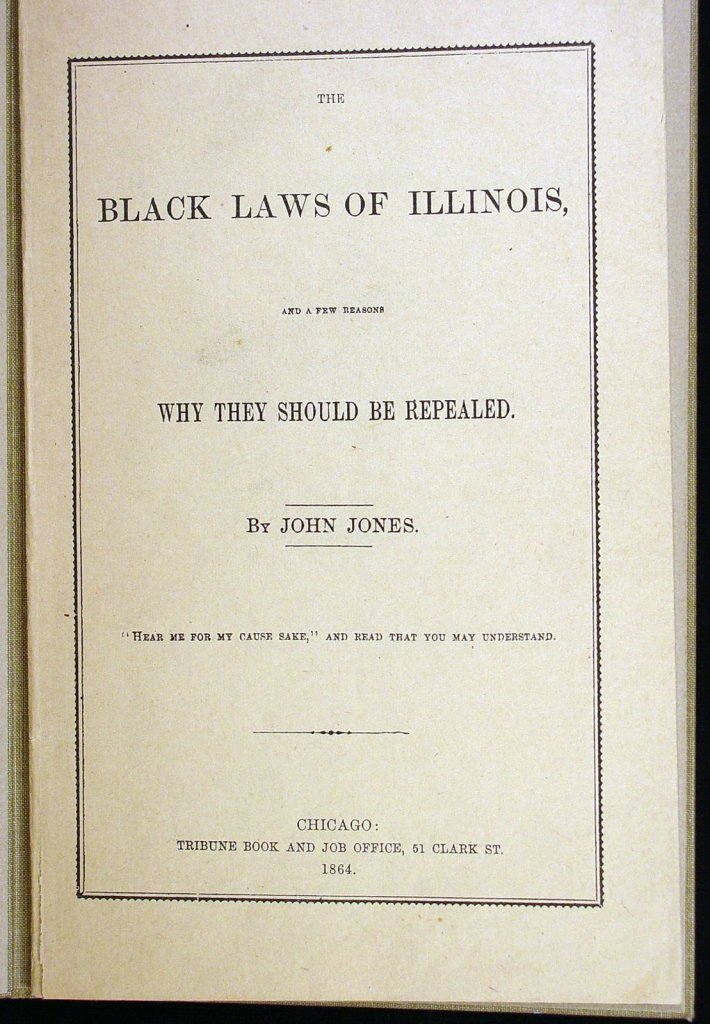
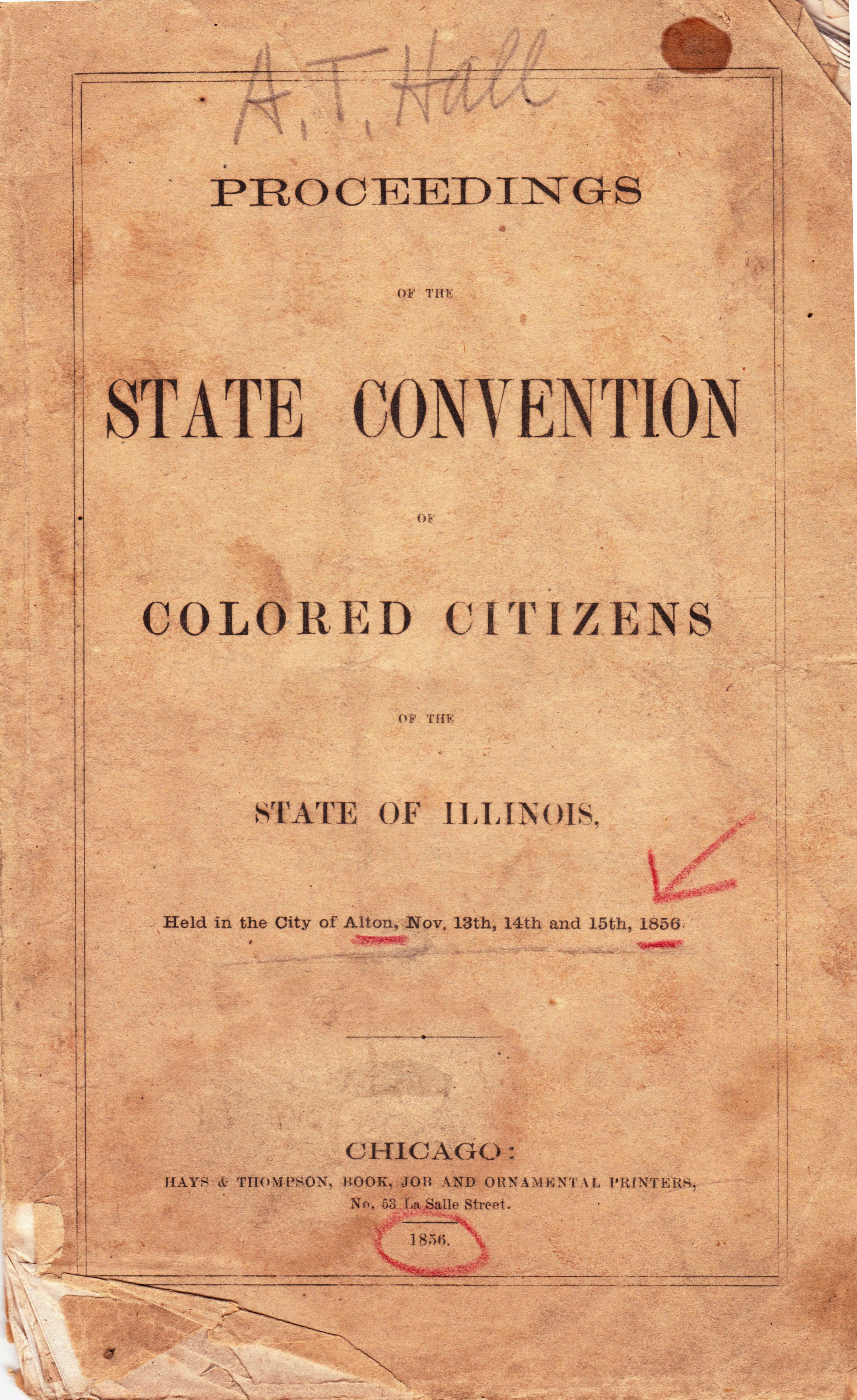
John Jones distinguished himself in the black convention movement beginning August 7, 1848, when he was elected vice president of the Colored National Convention; Frederick Douglass was elected president. As a delegate to the Cleveland conference held in September that year, he supported their primary interest in equality for blacks. He saw mechanical trades, business, farming and other professions as appropriate for blacks and condemned menial labor except when it was the only means of obtaining a living. Jones was elected president of the first Black Illinois State Convention held in Chicago on October 6-8, 1853. While establishing a successful tailoring business, he grew in his role as activist, organizing petition drives that urged the Illinois legislature to repeal state black laws which denied African Americans the basic rights of citizenship. After years of work on the issue, John Jones finally attained his goal in the closing months of the Civil War. In late 1864, he wrote a booklet in favor of repeal, stating that African Americans were citizens “by the hardships and trials endured, by the courage and fidelity displayed by our ancestors.” When a bill ending the black laws was introduced into the state legislature, Jones worked tirelessly as a lobbyist and “every legislator, no matter their political stripe” was made aware of his presence. Following passage of the bill in February 1865, Jones was heralded as the “right man in the right place.”
John Jones wrote that “No man is benefited by defrauding another man of his inalienable and political rights. If John Jones, colored man and tax-payer, is excluded from the polls In Chicago… A wrong is done to Jones… Jones owes allegiance to the same government, is obliged to help support it, must obey its laws, pay taxes to it and fight for it … Why, then, is he not entitled to the protection from it, and to the same voice at the ballot-box? There is no answer in the negative to this interrogatory, founded in reason. Jones is disfranchised and wronged in person and rights, solely because the wrong doers have the power to injure him, and have a prejudice against the shade of his complexion. There is no other reason or cause in the world”.
After the war, Jones championed efforts to attain full citizenship. In February 1866 he was part of a delegation of African Americans including Frederick Douglass that met with President Andrew Johnson. Maintaining that it was in the best interest of the country to extend civil rights, including the suffrage, to African Americans, the delegation was rudely rebuffed by Johnson who urged colonization as the only solution to the problem of racial inequality. Following the meeting, a public gathering held in Chicago decried Johnson’s position and commended Jones. In 1867 a new petition drive pressing for black suffrage was organized in Chicago, with Jones, “an earnest advocate of his colored brethren,” once again playing a key role.
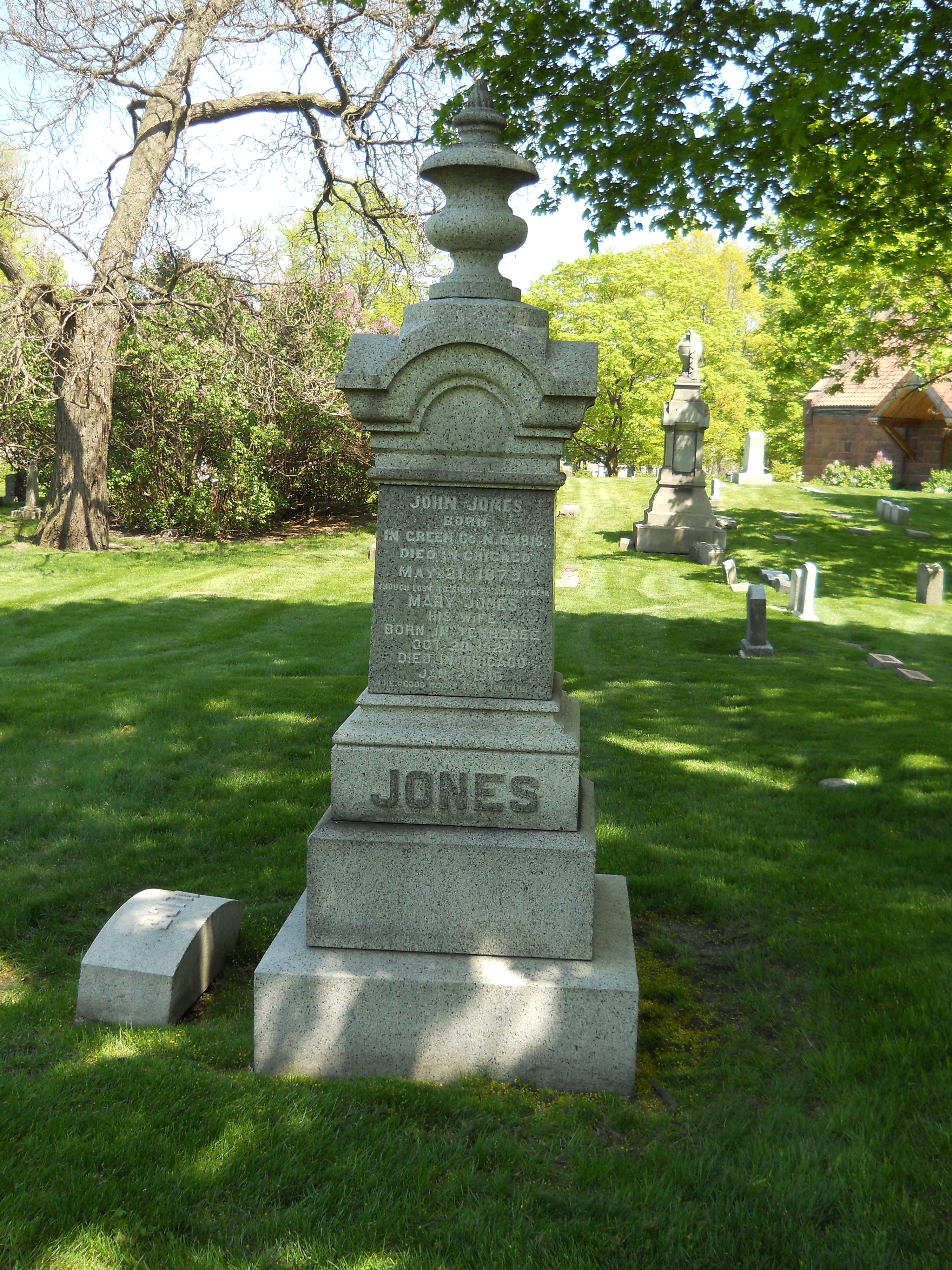
John and Mary became actively involved in the abolitionist movement to end slavery. They held regular meetings at their home and frequently harbored runaway slaves passing through the city on their way to Canada. During the Civil War, John Jones raised a regiment of black troops in Chicago; they trained at Camp Douglas and served on the front lines. Jones fought a long and successful battle against the Illinois Black Laws that severely restricted the social and political rights of African Americans. He also served as an honorary pall bearer at Abraham Lincoln’s funeral in Chicago and served on the Cook County Board of Commissioners, one of the first blacks to win elective office in the North. Jones died in 1879 and is buried in Graceland Cemetery, which is on the north side of Chicago, not far from Wrigley Field.
A few of his many accomplishments:
- 1st first person of Color to hold public office in Chicago as a Cook County Commissioner
- Co-Founder of Mt Olivet Baptist Church in Chicago
- Responsible for the repealing of the Black Codes (Jim Crow) laws of Illinois
- A Civil War Organizer
- Became one of the wealthiest Black men of North America
- Worshipful Master of John Jones #7 Masonic Lodge
 We Love More Dr.Bruce