
You had the power all along, my dear.”
– Glinda, The Wizard of Oz
I promise to fix what you feel is not whole,
To give you the courage, the heart, and the soul.
You follow my voice through shadow and flame,
Not knowing I am hiding, without a name.
You chase me for years, with breath and with ache,
But all that I give is performance and fake.
Until one day, you pull back the screen.
And find that reality is not what it seemed
What am I?
Butterfly Mondays | May 12, 2025
Theme: Reclaiming Power and Releasing the Wizzo
Healing Station Zoom: 6:00 PM EST
🔗 Join Here : https://us02web.zoom.us/j/88324556318?pwd=QlNsT3lLWnc0alo3K09nN0JoaFNxQT09
In This Buildshop:
What happens when you realize the Wizzo was never real? What if the person you’ve been chasing to fix you was a projection built on fear, performance, and programming? This week, we let go of the illusion and reclaim the truth.
Join us to explore:
• The psychology of illusion and programming
• The inner engineering of reclaiming power
• How to stop chasing transformation and become it
• A Wizzo Liberation Ritual that helps you walk the Yellow Brick Road differently.
For years, we have chased approval, healing, love, safety, and wholeness. We walked the Yellow Brick Road, hoping someone could give us what we were missing.
But eventually, the curtain falls, and we realize: The Wizzo was never real, and our power was never lost. It was always waiting for us to remember.
• This week, we stop performing, we pause, and reclaim our voice, our agency, and our ability to change from within.
• This week, we stop chasing mirages and start walking with mirrors.
We are becoming the “social architects” who will design our healing and transformation.
Let’s affirm and manifest our divine cocoons together. #WeAreTheButterflyEffect
Take the Releasing the Wizzo Quiz https://welovemore.typeform.com/ReleasingWizzo
Subscribe to the Blog: https://welovemoredrbruce.com/
In the world of The Caterpillar’s Journey of the Heart, power is not dominance.
It is not a hierarchy. It is not who has the most visibility, resources, or control. However, what does power mean when we have been programmed to believe that someone else holds the key to our healing and transformation? Let us dismantle the illusion of the Wizzo, the all-knowing figure at the end of the Yellow Brick Road, and begin the sacred work of reclaiming our agency, authority, and inner compass. This chapter is not just about abandoning the Wizzo; it is about rewriting the very nature of the journey.
The Yellow Brick Road stretches endlessly, shimmering with the promise of answers, fulfillment, and a long-sought sense of home. It is the path we take when we believe something like love, healing, and purpose exists beyond our reach, waiting to be discovered. However, as we walk step by step, we rarely pause to consider: What if the road itself is an illusion?
Many embark on this journey believing that the Wizzo holds the key to our wholeness. If we endure the struggles, navigate the hardships, and remain faithful to the path, we will reach a place where everything will make sense, our wounds will be healed, and we will finally find our belonging. However, the cruel trick of the Yellow Brick Road is that it offers an illusion of progress while keeping us running in circles.
What Is Power? Reclaiming It in the Context of Healing
In the realm of transformation, power is something more profound. Power is the ability to exercise agency, make choices, and effect change from within. Power, in the context of healing, is the reclamation of agency. The first step in reclaiming our power is realizing that no external force, whether it be a Wizzo, another Wizard, or a fabricated version of ourselves, can grant us the healing we seek. The path we walk must be self-acceptance, self-discovery, and self-love. The Yellow Brick Road may have led us away from ourselves, but it also offers an opportunity. By recognizing its illusion, we can transform our journey from an endless search for completion into an intentional healing path, where every step is a return to self.
It is the ability to choose, to change, and to rewrite our narrative, even if the world never believed we could. In trauma-centered spaces, power often feels like the very thing that was stolen:
• Our ability to say “no” or “yes” without fear
• Our ability to define who we are and what we are worth
• Our ability to shape our futures beyond the limits of pain
When someone has lived through trauma, agency is one of the first things to fracture.
We stop believing we have a say and begin performing, pleasing, finessing, or freezing.
The Wizzo offers hope and a sense of relief, even though the entire journey is an illusion of healing. The Wizzo is an external authority that holds our answers and provides a false sense of purpose. “If I can just reach the Wizzo, I will be okay.” “If I perform well enough, someone will fix me.” “If I follow the rules, I will finally feel worthy.”
However, healing does not exist in that fantasy. Healing begins the moment we reclaim our power to choose, not in defiance, but in truth. This traumatic narrative makes it difficult to select through a lens of power:
To select our cocoon even when we fear the darkness.
To choose authenticity even when the mask feels safer.
To choose love when survival tells us to protect.
Power in Transformation Means:
• Agency – I am not trapped in this pain. I can shape my next moment.
• Choice – I can move toward joy, rest, connection, or change.
• Influence – I can affect my inner world and my outer circumstances.
• Self-authorship – I can rewrite the story, not just live the one trauma gave me.
This is what it means to reclaim power, not through external titles or control, but through conscious self-awareness and alignment. Power is choosing to believe in your wings before anyone else sees them.
Defining Power as Agency
Psychologically, agency refers to the capacity to act intentionally and make choices that influence one’s life (Bandura, 1989). When trauma strikes, especially early and repeatedly, it can strip a person of their perceived control over their body, identity, future, and even their thoughts. This is why healing begins not with doing, but with making a choice.
To say, “I get to shape what happens next,” is to initiate transformation.
Self-determination theory (Deci & Ryan, 2000) supports this notion. When individuals feel autonomous, competent, and connected, they begin to thrive. However, when these pillars are undermined, they become susceptible to illusion.
The Wizzo Is a Magic Trick
Let us discuss illusions. David Copperfield once made the Statue of Liberty disappear on live television. Audiences gasped and applauded. Furthermore, even though we all knew it couldn’t be real, our minds were still convinced, for a moment, that something massive was missing. Since the Wizard was always an illusion, searching for the Wizzo in our story leaves us feeling stuck, perplexed, and in a perpetual state of survival.
Many of us spend our entire lives trying to find Love in the name of “Home,” only to feel more lost than when we started. However, what happens when “Home” has never been safe? For some, Home-B.A.S.E. (Brave, Affirming, Secure Environment) is interpreted as a nightmare rather than a refuge, making the idea of returning to self an even more significant challenge. The illusion of the Yellow Brick Road keeps us believing that healing exists outside of us, just a few more steps ahead, if only we endure longer. However, what if the road itself is a deception? What if we were never meant to reach a destination, but instead to turn inward? If all else is true, to return home, we must heal home.
The trick?
Lighting. Positioning. Framing. Distraction. Repetition.
Copperfield did not move the statue; he shifted our perception. The Wizzo works the same way. We are conditioned to believe that our wholeness must be earned, that someone else holds the blueprint for joy. If we perform the right tricks, such as achieving success, perfection, and likability, we will ultimately receive the aspects of ourselves that we feel are missing.
The Yellow Brick Road stretches endlessly, shimmering with the promise of answers, fulfillment, and a long-sought sense of home. It is the path we follow when we believe something like love, healing, and purpose exists just beyond our reach, waiting to be discovered. However, as we walk step by step, we rarely pause to consider: What if the road itself is an illusion?
Many embark on this journey believing that the Wizzo holds the key to our wholeness. If we endure the struggles, navigate the hardships, and remain faithful to the path, we will reach a place where everything will make sense, our wounds will be healed, and we will finally find our belonging. However, the cruel trick of the Yellow Brick Road is that it offers an illusion of progress while keeping us running in circles.
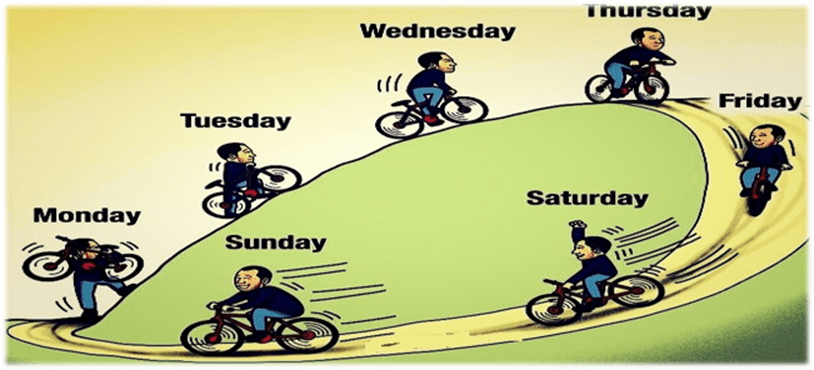
At some point, it no longer matters because the illusion becomes a way of life and a reason for living.
The Psychology of Believing Illusions
Cognitive illusion theory tells us that our brains are meaning-making machines (Kahneman, 2011). When given incomplete or emotionally charged information, we often fill in the blanks with the most compelling narratives, even if they are false.
Let us delve deeper into why the Wizzo works. We believe in the Wizzo, whether real or fake; it just has to feel real. Furthermore, when we are experiencing a traumatic narrative or in survival mode, feeling is often more convincing than fact. This is where Cognitive Illusion Theory comes into play. Our minds crave patterns, meaning, and certainty. However, when fear, stress, or expectation are intensified, our brains often substitute illusion for truth, especially if it aligns with the story we have already been told.
Case Study: “The War of the Worlds” Broadcast Panic
On October 30, 1938, radio actor Orson Welles performed a live dramatization of H.G. Wells’ War of the Worlds. Despite disclaimers, the performance was so realistic and masterfully timed that thousands of listeners across the U.S. believed aliens were truly invading Earth. People fled their homes, jammed highways, and called police in terror. Some reportedly armed themselves, while others wept and prayed.
What is happening? Cognitive illusion theory suggests that during moments of heightened emotional arousal, paired with perceived authority, the brain is more inclined to accept fiction as fact, particularly when there is no competing source of calm, grounded information. The illusion transforms into the truth as it fills a psychological void, much like the Wizzo.
When we believe that someone else holds our future, our healing, or our hope, we are more likely to surrender our discernment. We walk not because it makes sense, but because we are afraid to stop.
More Real-Life Examples of Cognitive Illusion
The McGurk Effect:
When sound and visuals are mismatched, our brain often “hears” the wrong sound to align with what we see. Our perception tends to bend toward coherence, even if it is false.
The Wizzo is the Most Convincing Illusion of all
If the Wizzo is an illusion, why do so many still walk the road to find him, her, or it? Because walking away from the Wizzo is not just about leaving a false figure; it is about breaking up with everything we were told would make us whole.
• External goals. (If I get the job, degree, marriage, approval…)
• Social validation. (If they like me, I must be worthy.)
• Trauma responses. (If I control enough, I will finally be safe.)
• Cultural programming. (Success = applause, not alignment.)
The longer we walk toward the Wizzo, the more convincing the illusion becomes. Moreover, like Shamu in the pool, we learn to perform for fish when we were born for the ocean. Letting go of the Wizzo means letting go of:
• The applause of others
• The myth that wholeness is granted, not grown
• The belief that your worth is tied to how well you perform
The most dangerous aspect of the illusions connected to the yellow brick road is its false promise of arrival. It tells us that we will be whole once we reach the destination. However, the road is a continuous cycle with multiple pathways leading nowhere. Without realignment, we may never realize that the actual destination was never external but always within us.
Placebo Effect:
Patients improve because they believe they have been given medicine, even if they have not. The brain generates real physiological responses to an illusion of healing.
The Rubber Hand Illusion:
When a rubber hand is stroked in sync with a hidden real hand, people begin to perceive the fake hand as their own. The brain rewrites reality based on synchronized cues.
Reclaiming Power Is Breaking the Spell
Reclaiming our power is not merely a decision; it is an act of awakening. It involves stepping behind the curtain and realizing that the Wizard is a person, not a magical being, but someone with a microphone. Next comes the understanding that we, too, can hold our microphone and amplify our voice. It requires remembering that while trauma convinced us to perform, healing allows us to pause, rewrite, and transform.
Furthermore, when we define power not as control but as conscious self-alignment, we begin to see the Yellow Brick Road not just as a path to performance, but also as a mirror. It is a space to remember our light, a field where we discover that the gifts have been inside us all along.
Walking the Yellow Brick Road Differently: Becoming the Lighthouse
Once we reclaim our power through detachment, discernment, and desire, the Yellow Brick Road transforms:
It is no longer a path to the Wizzo.
It is no longer a hallway of hoops and performance.
It becomes a canvas, a mirror, a field of practice.
The road does not make us whole; it reveals we already are.
The Lighthouse Does not Chase Ships.
Most of us were taught to walk the Yellow Brick Road looking for validation, applause, or a certificate of transformation signed by someone else. However, a lighthouse does not chase ships to prove it is shining. It stands. It reflects. It radiates from truth.
To walk the Yellow Brick Road differently is to:
• Choose presence over perfection
• Choose authenticity over performance
• Choose radiance over relevance
• Choose Love, even when fear is louder
It is to become the guiding light on the road, not just the one searching for it.
Real-World Practice: Lighthouse Living
• When others are caught in Wizzo-thinking, we remain anchored.
• When performance invites us to fake it, we soften into truth.
• When the crowd moves faster, we pause and listen inward.
• When others are searching for the Wizzo, we remind them:
“We had the power all along.”
Theory Connection:
Leadership Embodiment & Light-Based Influence
Research in transformational leadership (Burns, 1978) suggests that leaders who embody their values, rather than imposing them, create the most enduring and inspiring transformations.
Like a lighthouse, they guide without force and lead by resonance. Walking the road differently means that we are not followers on a path; we are guides within a field.
Letting Go of the Map
When we stop chasing the Wizzo, there is no map; there is only instinct, light, and presence. Moreover, we understand that we do not need any more because the point of the Yellow Brick Road was never the Wizzo. It was always to walk, remember, and reclaim power.
Final Reflection: What Wizzo Am I Ready to Release?
We all have a Wizzo. Sometimes it is a voice, fear, a system, or even a memory.
However, the moment we realize the Wizzo is not our destiny, just a distraction, we step into the real magic. Releasing the Wizzo is not the end of the journey. It is the beginning of waking up to start living.
Reflection Questions:
Who would I become if I released the illusion?
What version of the Wizzo have I been walking toward in my own life?
(e.g., success, love, performance, external healing, perfection)
What has this Wizzo promised me?
Has it delivered?
What would it mean to reclaim that power?
What would my journey look like if I stopped chasing and started choosing?
Release Practice: “The Wizzo Burn”
Write down a belief, narrative, or role you have carried to please the Wizzo.
(e.g., “I must be perfect to be loved.” “I am only worthy if I succeed.”)
- Hold the paper to your heart. Breathe. Say aloud:
“This no longer defines me.” - Burn the paper (safely) or tear it into pieces. As you do, repeat:
“I reclaim my power.” - Close your eyes. Place your hand on your heart. Whisper: “I walk the road awake.”
Final Metaphor: The Mirage and the Mirror
The Wizzo was a mirage and a hologram created by fear, longing, and the need for survival. However, once you know the mirage is not real, you begin to see something more profound in the road ahead; It is a mirror. It does not show you what you wish you were.
It reflects what you already are:
• A healer.
• A breaker of cycles.
• A lighthouse.
• A butterfly in motion.
And so you walk, not to arrive, but to remember.
 We Love More Dr.Bruce