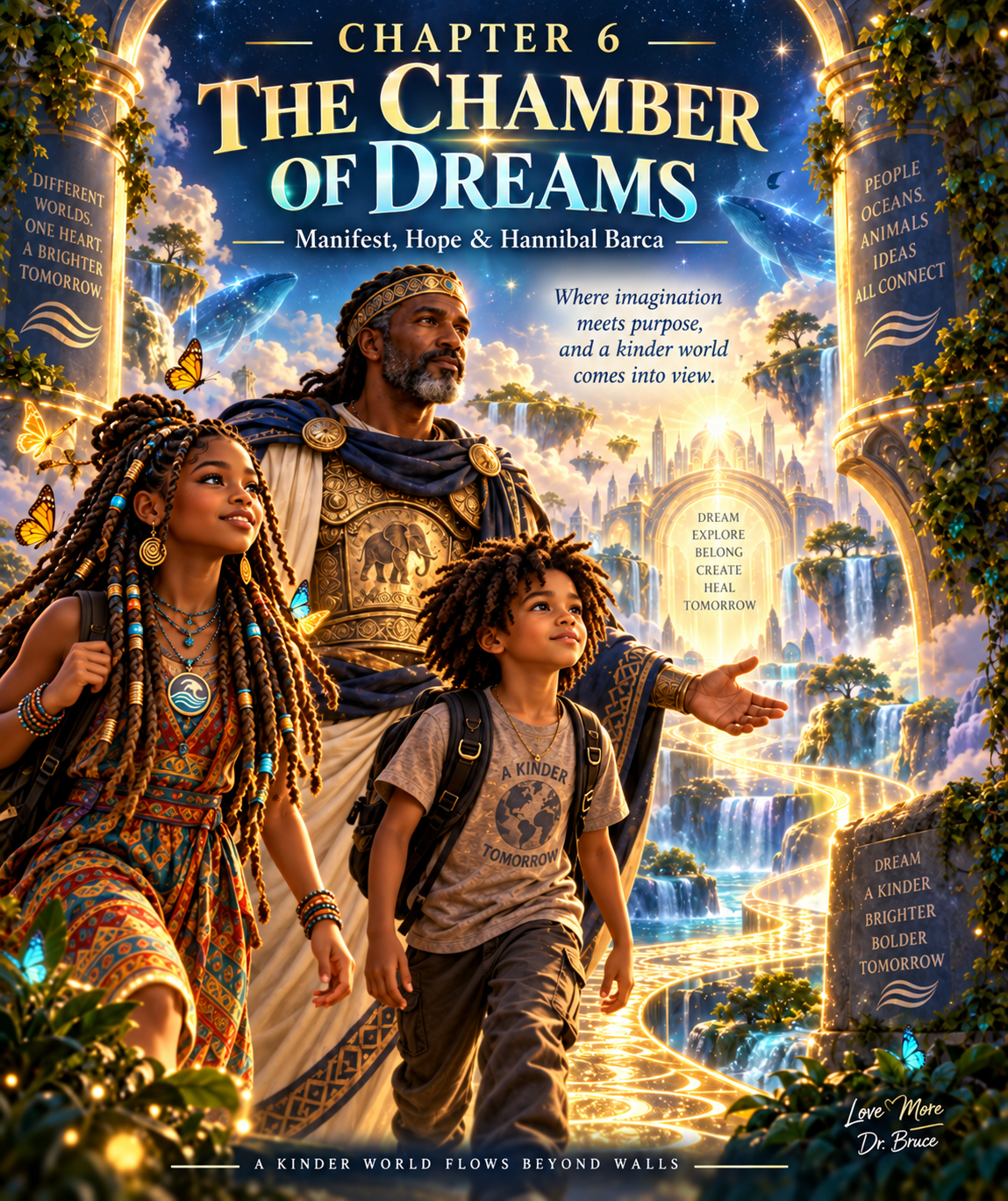
Transformative Life Coaches and Healing Leaders Certification, Monday, Oct 26, 6- 8 p.m. on the Healing Station Zoom https://us02web.zoom.us/meeting/register/tZwude2tqz0pG9xJ6zFgGt58RxiHKEVI2PDr
What Happens to a Dream Achieved? By Dr. Bruce Purnell
What happens to a Dream achieved?
Does it shine like a mirror reflecting the sun?
Does it open our hearts to living,
as if being alive can truly be fun?
Does it fragrance the air like sweet apple pie,
or become a truth we no longer deny?
Perhaps it grows so rooted and bold
that it bends beneath pressure but never will fold.
Then it becomes part of the greatness
in the stories our lives have told
a Butterfly born from believing,
a future our spirits were brave enough to hold.
Montage of a dream deferred? By Langston Hughes
What happens to a Dream Deferred?
Does it dry up
like a raisin in the sun?
Or fester like a sore—
And then run?
Does it stink like rotten meat?
Or crust and sugar over—
like a syrupy sweet?
Maybe it just sags
like a heavy load.
Or does it explode?
Last week, Journeyers entered the Chamber of Dreams with a new pair of lenses. Healing helped us ask what happened to the Dream; Energy helped us understand why people conserve effort when the future feels unbelievable; Affirmations gave us truthful language; Love asked what relationships, boundaries, and repairs allow possibility to circulate, and Identity asked whether the Dream truly belongs to us. Then Langston Hughes entered the War Room with a sacred question: what happens when a Dream is repeatedly delayed?
This week, we will complete Pt 1 and ask what comes next. How do we embody Hughes’s wisdom rather than just admire it? How does an impossible Dream become a real Quest without turning Hope into pressure, strategy into control, or structural barriers into personal failure? Manifest, Hope, Hannibal Barca, the Headmaster, and a fictionalized literary presence of Langston Hughes are helping us build a Quest Map grounded in Identity, Purpose, agency, pathways, evidence, relationships, resources, structural opportunity, the next Yellow Brick, and adaptation.
It is time to apply the Chambers as lenses, use the D.R.E.A.M.S. Practice, distinguish what must awaken within the Dreamer from what must change around the Dreamer, and leave with one next brick and an embodiment covenant.
| WEB ANCHOR A Dream becomes a Quest when possibility receives a pathway, a people, a practice, and a next Yellow Brick. |
ESSENTIAL QUESTION
How do we honor what a deferred Dream has carried while building the agency, pathways, evidence, relationships, resources, and conditions that allow the Dream to become a living Quest?
Learning Objectives
• Connect Healing, Energy, Affirmations, Love, and Identity to the way a Journeyer imagines the future.
• Distinguish among a wish, a Dream, a Quest, achievement, and embodiment.
• Use Langston Hughes’s sacred question to examine what delay may be doing inside a person and around a community.
• Apply Hope Theory, self-efficacy, Narrative Identity, temporal orientation, and the Conservation of Energy.
• Use the D.R.E.A.M.S. Practice to move possibility toward aligned action without pretending certainty.
• Identify what must awaken within the Dreamer and what must change around the Dreamer.
• Name one next Yellow Brick and one embodiment commitment that can begin now.
Part 1 Refresher: The Chambers as Lenses
| Chamber Lens | What It Helps Us See |
| Healing | What happened to the Dream? What deserves acknowledgment, grief, protection, support, or repair? |
| Energy | Where has energy gone, and what would make the future believable enough to receive investment? |
| Affirmations | What truthful language supports dignity and agency without pretending words alone remove barriers? |
| Love | Who can encourage without controlling? Which boundaries, relationships, and repairs protect the Dream? |
| Identity | Whose Dream is it? Can the Journeyer recognize themselves, their values, and their community in the future? |
| Dreams | What future is asking to be imagined, prepared for, protected, and helped into form? |
From Wish to Embodiment
| Movement | Central Function |
| Wish | Names something desirable |
| Dream | Names a meaningful future possibility |
| Quest | Organizes purpose, agency, pathways, people, resources, and action |
| Achievement | Marks a completed milestone |
| Embodiment | Makes the Dream visible in values, habits, relationships, structures, and ripple |
A Quest does not guarantee the outcome. It organizes a meaningful, ethical, adaptive relationship with possibility.
Theory Bridges: How the Dream Moves From Awareness to Embodiment
Dream awareness and Dream embodiment are related but not the same. Dream awareness begins when a Journeyer can recognize, name, question, reclaim, revise, or grieve a meaningful future. The Dream may first arrive as a feeling, longing, image, protest, prayer, need, memory, or possibility before it becomes a clear plan. Dream embodiment begins when that imagined future starts to influence the Journeyer’s present relationship with Identity, time, energy, choices, boundaries, resources, relationships, and action. The Dream is no longer only something the Journeyer thinks about. It begins to shape how they live, prepare, recover, decide, and place the next Yellow Brick. Dream awareness helps us see another future, and Dream embodiment helps the present begin to cooperate with it. These five theories don’t function in isolation; together, they work like parts of one bridge. Hope gives the Dream direction; Self-efficacy helps the Journeyer believe they can participate; Narrative Identity gives the Dream a place in the Journeyer’s life story; Temporal Orientation connects the past, present, and future; and The Conservation of Energy helps us understand when the future has become believable enough to receive present investment.
| Hope Theory Hope becomes active when a meaningful goal is joined with agency and more than one pathway. |
Hope Theory: Giving the Dream Direction and More Than One Road
Hope Theory helps transform a Dream from a meaningful desire into an active quest. A Journeyer may become aware of a Dream yet still not know how to move toward it. Awareness may sound like:
• “I want something different.”
• “I want to create a Healing Station.”
• “I want to return to school.”
• “I want to experience peace.”
• “I want my family to interrupt this cycle.”
Those statements signal a shift in perspective and articulate possibility. However, Hope becomes more active when the desired future is paired with two capacities: agency, the growing belief that some movement remains possible, and pathways, the routes connecting the present to the desired future. This means the transition from Dream awareness to Dream embodiment is not just: “I believe in my Dream,” but “This Dream matters to me, I have some capacity to participate in it, and I can begin identifying routes toward it.”
The importance of multiple pathways cannot be overstated, and a Dream connected to only one route may collapse when that route closes. A Journeyer may conclude that the Dream has died when, in reality, one pathway has become unavailable. Embodied Hope allows the Journeyer to ask:
• “What is another road?”
• “Who might help me see an option I cannot yet see?”
• “What part of the Dream must remain, and what part of the plan may change?”
• “What is one movement I can make without having the whole map?”
Within the Love More framework, Hope is strengthened not only by personal determination but also by evidence, relationships, resources, cultural grounding, belonging, flexibility, and structural opportunity. Hope should never become another demand for the Journeyer to perform certainty. A person may believe in one next step before believing in the whole future.
The Embodiment Movement
Hope Theory moves the Journeyer from: “I can imagine a destination” to: “I can participate in building, testing, and revising pathways toward it.” Hope gives the Dream direction, but Hope alone does not answer whether the Journeyer believes they can successfully move along the road. That is where self-efficacy and Dream Efficacy come in.
| Self-Efficacy and Dream Efficacy Small mastery experiences, truthful encouragement, representation, body awareness, and real scaffolding make possibility more believable. |
Self-Efficacy and Dream Efficacy: Helping Possibility Become Believable
Hope may tell the Journeyer that a pathway exists. Self-efficacy asks: “Do I believe I can take the next step on that pathway?” A person may believe college is possible while doubting their ability to complete an application; believe healthy Love exists while doubting their ability to recognize or receive it; and believe leadership is possible while assuming it belongs to people from a different background, neighborhood, age, class, or educational experience. They may believe a business could succeed while doubting their ability to make the first call, ask for help, develop a budget, or recover from rejection.
This is why the Chamber introduces Dream Efficacy as an emerging TLiCHL concept. Dream Efficacy is the growing belief that a Journeyer can imagine, articulate, protect, plan for, and help create a meaningful future, while seeking support, addressing barriers, and adapting to changing circumstances. It does not promise that every Dream will come true or that confidence will remain constant.
Dream Efficacy grows with experience. A Journeyer writes one page, makes one call, attends one class, saves one amount, shares one idea, sets one boundary, and returns after one disappointment. Each step becomes evidence: “I have moved before, and I may be able to move again.” Truthful encouragement also matters; empty praise may feel good temporarily, but it doesn’t always provide reliable evidence. More useful encouragement highlights what the Journeyer actually did:
• “You prepared carefully.”
• “You returned after disappointment.”
• “You asked for help before the crisis.”
• “You made a different choice even while you were afraid.”
Representation is important because seeing someone with a related identity or lived experience can broaden what the Journeyer considers possible. However, another person’s story should be permission, not pressure. Their path is evidence that a possibility may exist, not a command to copy their life. The body also enters the process, and a racing heart before a significant step may be interpreted as either “I cannot do this” or “This is important, and my body is preparing for something unfamiliar.”
The goal is not to rename every fear as excitement. The Journeyer is invited to notice the body, interpret the signal, regulate where possible, seek support, and choose the next movement. Finally, Dream Efficacy cannot be reduced to mindset. Paid training, transportation, safe housing, child care, technology, coaching, accommodations, fair access, and institutional accountability can make action materially possible. Confidence should not be expected to carry a person across a bridge that no one has built. The Embodiment Movement in Self-efficacy and Dream Efficacy moves the Journeyer from: “A pathway may exist” to: “I can take part in this pathway, use support, learn from the movement, and return when I stumble.” The Journeyer doesn’t need to feel completely confident before beginning. Sometimes confidence comes from laying the first brick, not from needing it before you start.
| Narrative Identity The delay belongs in the story, but it does not have to remain the only author of the future. |
Narrative Identity: Giving the Dream a Place in the Life Story
Every Dream enters an already-in-progress story. Before a Journeyer names a Dream, they may already carry conclusions such as:
• “People like me do not do that.”
• “I always start and never finish.”
• “My family needs me too much for me to have a Dream.”
• “I am the strong one, so I cannot need support.”
• “I missed my time.”
• “I am too damaged.”
• “My past disqualifies me.”
• “That kind of future belongs to somebody else.”
Narrative Identity Theory helps us understand how people organize past, present, and anticipated future experiences into an evolving life story. That story includes themes, characters, wounds, turning points, values, goals, meanings, and beliefs about agency. Dream awareness helps reveal the story surrounding the Dream.
The Journeyer begins asking:
• “Who taught me that this future was unavailable?”
• “Is this Dream mine, inherited, borrowed, imposed, protective, reclaimed, emerging, or collective?”
• “What story have I been using to explain the delay?”
• “Has the delay become evidence that I am incapable?”
• “Has one chapter been mistaken for the whole book?”
Dream embodiment requires a fuller narrative, not a prettier lie. The Journeyer need not say: “Everything happened for a reason,” “The trauma made me stronger,” “The delay was a blessing,” or “I am completely over it.” Those statements may not be true, and a more complete narrative might read: “The Dream was deferred. The delay affected me. I developed protective responses and lost time, trust, resources, or opportunity. That history belongs in my story, but it does not automatically own every chapter still unwritten.” This is where authorship becomes important. The Journeyer cannot rewrite every event, but they can help interpret what it means, what remains possible, what must be grieved, and what the next chapter will require. Each embodied action becomes new narrative evidence.
The application says:
• “I am someone willing to begin.”
• The boundary says:
• “My Dream deserves protection.”
The request for help says:
• “Receiving support does not make the Dream less mine.”
• Returning after disappointment says:
• “A setback is an event in the story, not necessarily its ending.”
The Embodiment Movement
Narrative Identity moves the Journeyer from: “This is the story that explains why I cannot” to: “This history affected me, and I am becoming a conscious participant in what the story may mean next.” The deferred Dream remains in the story, but it no longer has to author the future by itself.
| Temporal Orientation The past may warn, the present may act, and the future may invite. The Quest listens to all three. |
Temporal Orientation: Connecting the Past, Present, and Future
Temporal Orientation helps us understand how the Journeyer relates to the past, present, and future, cognitively, emotionally, and behaviorally. Dream awareness may initially live almost entirely in the future: “One day…” “Eventually…” “When everything settles…” “When I feel ready…” “When I have enough confidence…” Dream embodiment requires relating the future to the present. The past provides context. It may carry warnings, grief, ancestral Dreams, unfinished repair, survival intelligence, evidence of endurance, and evidence of possibility. The present contains bodily signals, available relationships, current resources, active barriers, immediate needs, and the next place where choice can occur. The future carries possibility, fear, Purpose, uncertainty, imagined Identity, and collective vision.
Each time period offers insight, but none should have absolute authority. When the past becomes the sole forecast, the Journeyer may assume that what happened before is all that can happen again. When the present is organized solely around immediate survival, future investment may feel unsafe or irrelevant. When the future becomes disconnected from present reality, the Dream may remain a fantasy rather than embodied direction. The Quest must listen to all three. The past may say: “Be careful. This happened before.” The present may say: “This is what is available now.” The future may ask: “What would another possibility require?” Embodiment occurs when the Journeyer honors the past without allowing it to automatically govern every present decision and future possibility. It sounds like: “I understand why I became cautious,” “I notice what is true now,” and “I can place one brick toward what I am becoming.” The present is where the future first takes embodied form.
The Embodiment Movement
Temporal Orientation moves the Journeyer from: “I can imagine a future someday” to: “I can use the wisdom of the past, the realities of the present, and the invitation of the future to choose the next aligned movement now.” The Dream does not erase history. It helps history stop being the only possible prophecy.
| Conservation of Energy When tomorrow hasn’t earned belief, energy may stay with immediate survival. Healing helps the future become more visible and supported. |
The Conservation of Energy: Helping the Future Earn Investment
Within TLiCHL, the Conservation of Energy is a healing-centered metaphor for understanding why people may protect emotional, mental, relational, financial, or spiritual energy when the future has not provided enough evidence to earn belief. The young person who asks, “Why would I sacrifice the present for a future that I do not believe in?” may not be expressing laziness.
They may be expressing logic shaped by pain, instability, broken promises, oppression, disappointment, and survival.
If tomorrow feels imaginary, inaccessible, or unsafe, then investing in today’s relief, belonging, protection, pleasure, status, or survival may make more sense. People do not stop using energy when they stop believing in the future. They redirect that energy toward what feels immediate and real. This means Dream awareness alone may not release energy. A Journeyer may describe a beautiful future yet still be unwilling to sacrifice for it because the future lacks credibility. Dream embodiment requires the future to become more believable through:
• Evidence that movement has occurred before
• Representation that allows the Journeyer to recognize themselves in the future
• More than one pathway
• Relationships that encourage without controlling
• Material resources
• Structural opportunity
• A clear connection between the Dream and the Journeyer’s Identity and values
The task is not to shame the Journeyer for protecting the present, but to help the future become more visible, truthful, supported, resourced, relevant, accessible, and connected to a believable next brick. This is where the Conservation of Energy connects directly with the other theories.
• Hope gives energy somewhere meaningful to move.
• Self-efficacy gives the Journeyer evidence that movement may be possible.
• Narrative Identity allows the future to include a person like them.
• Temporal Orientation connects the future to something that can be practiced in the present.
Resources and structural opportunity demonstrate that the Dream is more than motivational language.
The Embodiment Movement
The Conservation of Energy moves the Journeyer from: “I cannot afford to invest in a future I do not trust” to: “There is enough evidence, support, meaning, and possibility for me to invest some energy in the next brick.” The Journeyer does not have to invest everything. The first embodied investment may be one hour, one conversation, one application, one boundary, one dollar, one request, or one decision not to disappear.
| Theory Bridge | Dream Awareness Question | Dream Embodiment Movement | What May Happen When It Is Missing |
| Hope Theory | What meaningful future am I moving toward? | Develop agency and multiple pathways. | The Dream remains a longing without a route. |
| Self-Efficacy and Dream Efficacy | Do I believe I can participate? | Build evidence through small movement, support, representation, body awareness, and scaffolding. | A pathway may exist, but the Journeyer cannot imagine themselves successfully using it. |
| Narrative Identity | What story surrounds this Dream? | Expand authorship so the delay is part of the story but not its only ending. | The Dream may feel borrowed, forbidden, or incompatible with Identity. |
| Temporal Orientation | Which time period is steering me? | Integrate past wisdom, present reality, and future possibility through the next brick. | The Journeyer may remain trapped in the past, consumed by the present, or lost in future fantasy. |
| Conservation of Energy | Has the future earned enough belief to receive investment? | Make possibility more visible, supported, resourced, and structurally credible. | Energy remains organized around immediate survival and protection. |
The D.R.E.A.M.S. Practice as the Integration Point
The D.R.E.A.M.S. Practice integrates these theories into a single embodied process. When the Journeyer Describes the Dream, awareness begins. The possibility receives language. When we Root it in Identity, Love, and Purpose, Narrative Identity helps determine whether the Dream genuinely belongs to them and which values it expresses. When we Examine Reality, Evidence, Barriers, and Environment, Temporal Orientation and the Conservation of Energy help identify what has happened, what is true now, and what would make future investment believable. When we Activate Agency and Alternative Pathways, Hope Theory turns the Dream into a quest with more than one possible path. When we Mobilize Relationships, Resources, and the Next Brick, supported action strengthens Self-Efficacy and Dream Efficacy. When we Study the Ripple, Sustain Hope, and Shift as Needed, we use feedback to revise pathways, update the life story, and decide what to sustain, release, or transform. That is why the movement from awareness to embodiment isn’t linear. A small success may strengthen efficacy, and stronger efficacy may increase Hope. Hope may loosen an old narrative, change how we understand the past, and make the future more believable. A believable future may attract more energy and produce another movement. Moreover, this movement creates new evidence and strengthens the Dream.
WEB Integration Statement
| Hope gives the Dream direction. |
| Self-efficacy helps the Journeyer trust their capacity to move. |
| Narrative Identity lets the Dreamer become an author rather than just a character in someone else’s story. |
| Temporal Orientation places the future on today’s Yellow Brick Road. |
| The Conservation of Energy makes the future credible enough to attract present investment. |
| Together, these theories help turn an impossible Dream into a real quest—and a real quest into a way of living. |
The Quest Equation
Dream + Meaning + Agency + Pathways + Evidence + People + Resources + Structural Opportunity + Next Brick + Adaptation = A Living Quest
The D.R.E.A.M.S. Practice
| Letter | Practice | Guiding Question |
| D | Describe the Dream | What do you want to experience, create, protect, change, or become? |
| R | Root It in Identity, Love, and Purpose | Why does it matter, and does it truly belong to you? |
| E | Examine Reality, Evidence, Barriers, and Environment | What is true now, what supports the possibility, and what may interfere? |
| A | Activate Agency and Alternative Pathways | What belongs to your influence, and what are three possible routes? |
| M | Mobilize Relationships, Resources, and the Next Brick | Who and what can help give the Dream a body? |
| S | Study the Ripple, Sustain Hope, and Shift as Needed | What happened, what did you learn, and what should change? |
The Question Was Never Meant to Remain on the Page
Langston Hughes’s question about the deferred Dream is brief enough to remember and large enough to follow us for a lifetime. It asks what delay, denial, exclusion, disappointment, and repeated promises may be doing inside a person, family, community, or nation. Part 1 helped us notice the pressure. Part 2 asks what we will do with the wisdom.
We Enter Dreams With New Lenses
Healing, Energy, Affirmations, Love, and Identity give Journeyers new lenses. Through them, a deferred Dream is not automatically evidence of laziness, weak discipline, or failed faith. The Dream may be wounded. The future may not have earned belief. The Dream may belong to someone else. The pathway may be blocked, and the person may be carrying the Dream alone. A new lens can reveal another Dream.
An Impossible Dream and Impossible Conditions Are Not the Same
The phrase “impossible Dream” often puts all attention on the courage of the Dreamer. Courage matters, but the Chamber also examines the world around the Dream. Love More asks two questions together: What must awaken within the Dreamer? What must change around the Dreamer so the Dream has somewhere to live? We do not turn structural walls into character flaws.
A Dream Becomes a Quest
A wish names something desirable; A Dream names a meaningful possibility; and a Quest organizes Identity, Purpose, agency, pathways, evidence, relationships, resources, structural opportunity, action, and adaptation around that possibility. Achievement marks a milestone, and Embodiment asks what the Dream has become in values, habits, relationships, structures, and ripple.
Hope Needs Agency and Pathways
Hope is more than optimism. It can say: I don’t know exactly what will happen, but I can identify something worth moving toward and start looking for pathways. One closed road doesn’t have to become the funeral of the whole Dream, and honest uncertainty isn’t a failure of Hope.
Dream Efficacy
Dream Efficacy is the growing belief that a Journeyer can imagine, articulate, protect, plan for, and help create a meaningful future while using support, responding to barriers, and adapting. It may grow through small experiences of movement, truthful encouragement, representation, body awareness, and real structural scaffolding.
The D.R.E.A.M.S. Practice
The D.R.E.A.M.S. Practice gives the Quest a living map. We Describe the Dream, Root it in Identity, Love, and Purpose, Examine reality and barriers, Activate agency and pathways, Mobilize people and resources, and Study the ripple so the route can learn.
What Happens to a Dream Embodied?
An embodied Dream becomes visible before it reaches its final destination. It appears in how we speak, rest, plan, resource, repair, welcome, protect, share power, and make room for another person to imagine. The process begins to carry the qualities of the future being created.
The Quest Still Gets to Move
A deferred Dream deserves acknowledgment. The present deserves truth. The future deserves possibility. We do not have to perform certainty to participate in Hope. The Nightmare may testify. The deferred Dream may grieve. The Quest still moves through a next brick, a repaired relationship, a requested resource, an alternate path, a changed policy, needed rest, or a decision to release what no longer belongs.
The Chamber Lens Circle
Revisit one Dream through Healing, Energy, Affirmations, Love, Identity, and Dreams.
The Hughes Mirror
Which image- drying, wound, odor, sugar coating, heavy load, or explosion- helps you name what the Dream may be carrying?
Within the Dreamer / Around the Dreamer
What must awaken within, and what relationships, resources, policies, opportunities, or protections must change around the Dream?
The D.R.E.A.M.S. Quest Map
Describe, Root, Examine, Activate, Mobilize, and Study the Dream.
The Next Yellow Brick and If–Then Plan
Choose one movement, name the predictable obstacle, and prepare a response.
The Embodiment Covenant
What will already be true in your behavior because the Dream is influencing who you are becoming?
Closing Affirmation
My deferred Dream deserves acknowledgment.
My present deserves truth.
My future deserves possibility.
I do not have to deny the Nightmare to reclaim my imagination.
I can grieve what was delayed without surrendering what may still become.
My Dream may change form without losing its sacred meaning.
I can distinguish an impossible Dream from conditions that have not yet been transformed.
I can ask for pathways, people, resources, and structural change.
I can place one Yellow Brick without pretending I control the entire road.
I am learning to embody the Dream through Love, Hope, Purpose, truth, and aligned action.
The Nightmare may testify, but it does not receive the final vote.
I am participating in a living Quest.
Contact: Sonya Cooper: scooper@lovemoremovement.org
Bring your journal, your truth, and one word you are ready to examine.
Community’s Scale for Healing Possibilities: https://welovemore.typeform.com/CSHP1
Intake: https://welovemore.typeform.com/TLiCHLIntake26
Course Books: “I Have The FEVERS For Jazz: Becoming The Butterfly Effect”; The Caterpillar’s WEB for Transformation https://www.lovemoremovement.org/books
We are becoming the “Social Architects” and “Social Alchemists” who will design our healing and transformation. Let’s affirm and manifest our divine cocoons together. #WeAreTheButterflyEffect #WeAreThePhoenixRising #WeAreHealingTogether #WeLoveMore See the full sessions on the Blog: https://welovemoredrbruce.com/ Please give Love More a Google rating: https://g.page/r/CYI0Pw3JjBrjEAI/review

